The Basics of Competition Weight Pull
Different Organizations Have Different Rules
Weight Pull Competitions are hosted by various national and international organizations. Each organization has their own rules, but the general structure remains the same.
Surface
Pulls fall into one of three surface categories: wheels, snow, or rails.
Distance
Depending on the hosting organization, the distance required is usually 15-16 ft.
Time
Dogs must pull the cart the required distance in 60 seconds or less.
Prior to pulling, dogs are weighed into the classes they will compete in.
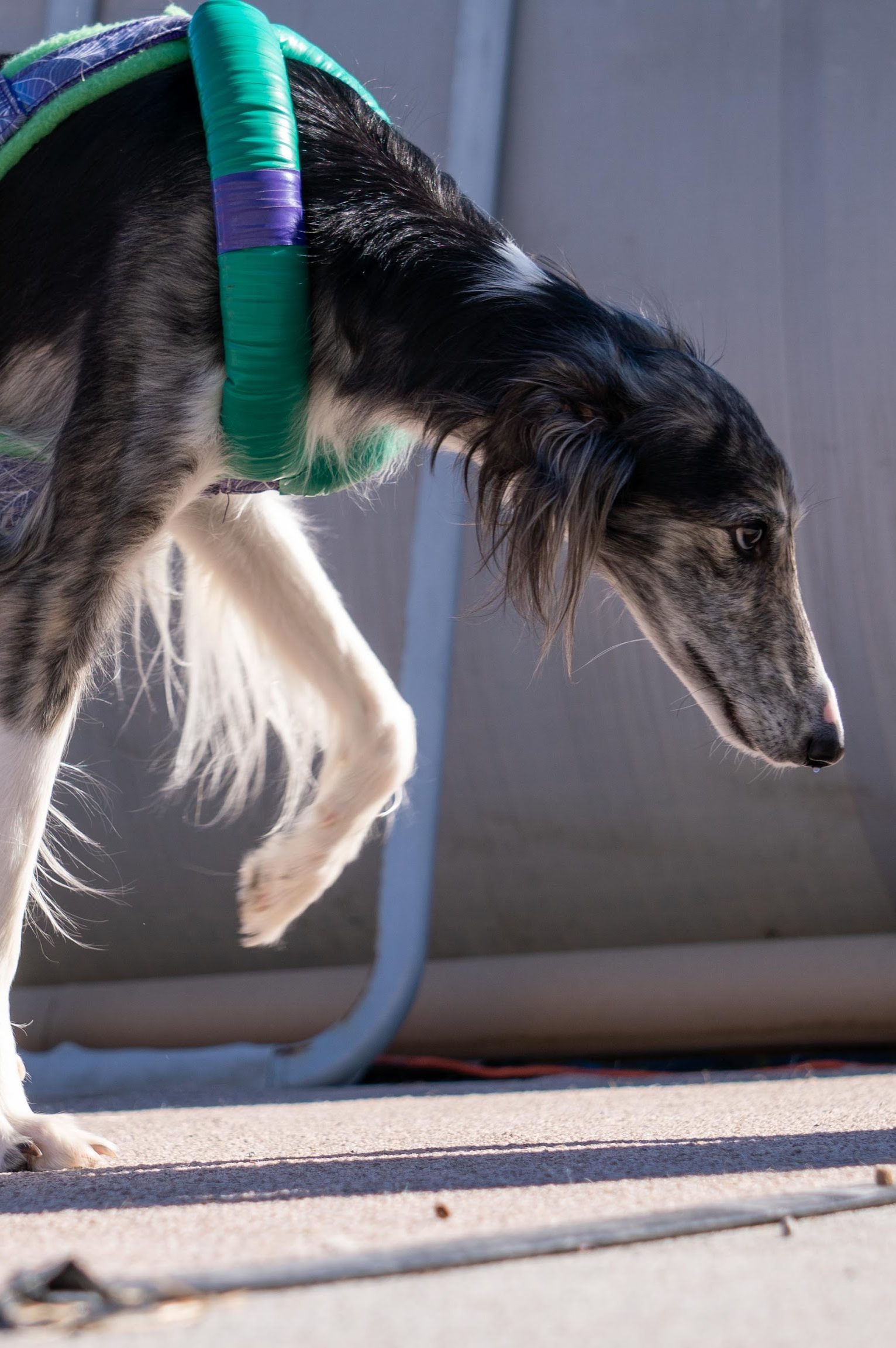
Kisch
Kisch the Silken Windhound weighs into the medium-low weight classes.
IWPA: 40# Class
W3PO: 40# Class

Thunder
One of our larger dogs, Thunder the German Shepherd, constantly weighs into the higher classes.
IWPA: 100# Class
W3PO: 100# Class
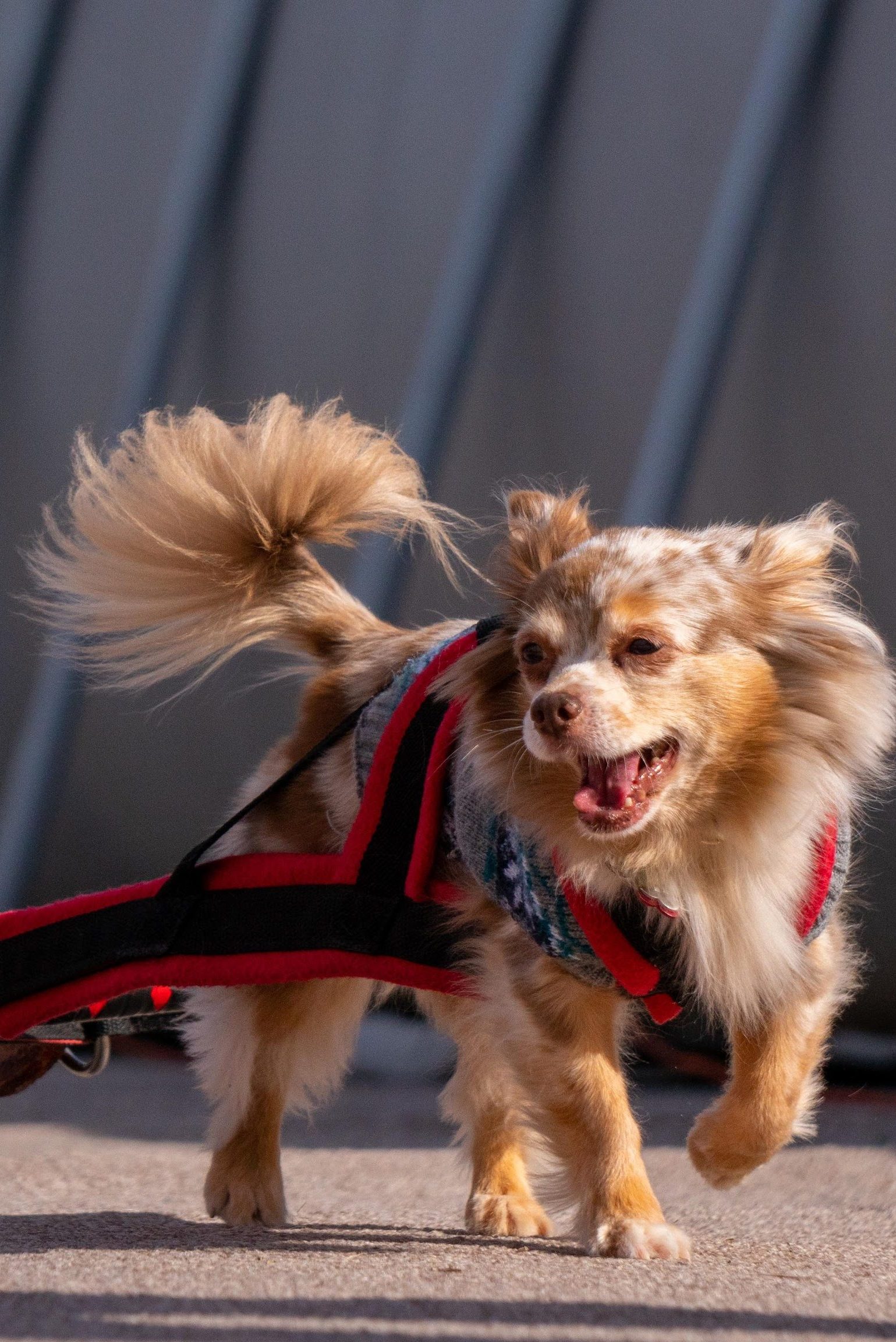
Spiderman
Spiderman is our resident chihuahua that weighs into the lower classes.
IWPA: 10# Class
W3PO: 20# Class

Q
Q is our Lab friend who weighs into the medium-high classes. Dog weights fluctuate, and often dogs on the border of the class will vary between classes.
IWPA: 60# or 80# Class
W3PO: 60# or 80# Class
Surfaces
Rails
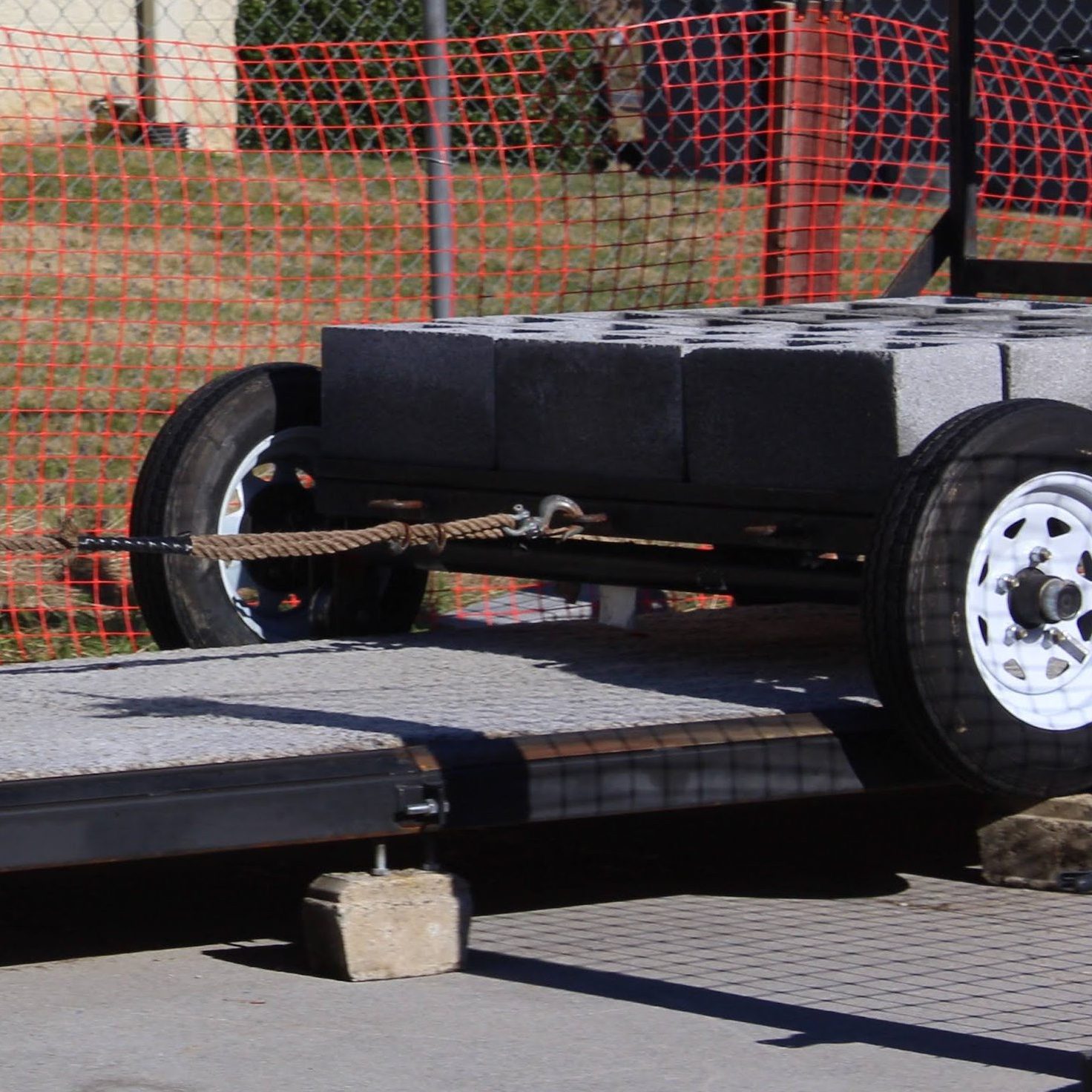
A cart with metal casters is pulled on a metal track. The pulling surface is often carpet. The dog is attached to the cart with an I-trace. It is not unusual to see higher weights pulled on rails due to the lower levels of friction.
Snow
A sled with two runners is pulled on packed snow by dogs connected with a V-trace. Snow is the surface with the highest friction, so lower pulls are seen more often.
Wheels

A cart with pneumatic wheels is pulled by the dogs attached by a V-trace. Wheeled pulls are conducted on either artificial or natural surfaces. The most common artificial surface is carpet. Common natural surfaces are packed dirt or grass. Wheels have a medium friction which varies depending on the surface.
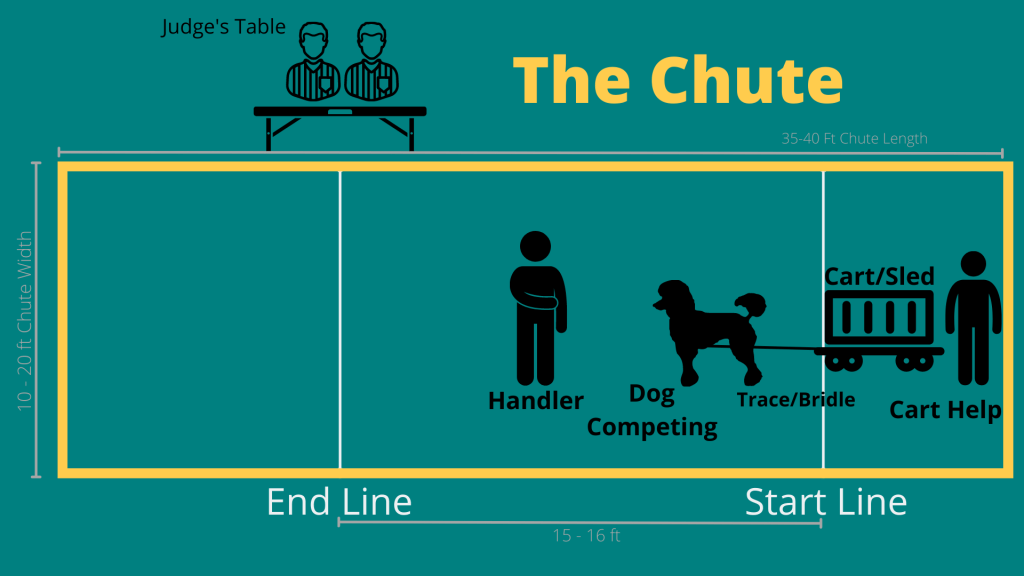
Pulls are conducted in the Chute.
The Chute is 10-20 feet wide and 35-40 feet long. It will have temporary fencing along the long sides, though the short sides will be open. There will be a marked Start Line and End Line.
Judges will be off to one side, often on the other side of the barrier. Cart Help will be behind the cart/sled.
The cart will be in position on the start line, usually with the trace already pulled out. Handlers will enter the Chute when directed. The Handler will hook their dog, then proceed to an acceptable Handling Position.
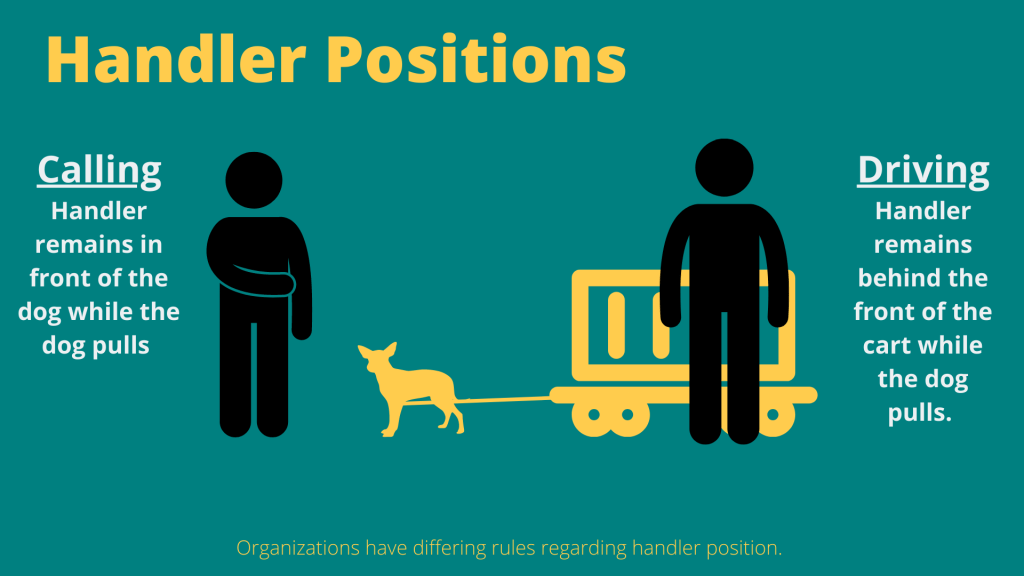
Handlers can be in a Calling position or Driving position.
Calling is the most common handling position. When Calling, the handler encourages their dog to pull from in front of them. Some organizations require handlers to Call from across the End Line, while others allow handlers to be right in front of their dog.
The Driving position is less common. Handlers move behind the front edge of the cart/sled after hooking their dog and remain behind there while encouraging their dog to ‘drive’ forward.
Rounds, Drops, Passes, and More
Rounds are defined by the weight on the cart.
Round 1 of a Pull is generally an empty cart/sled. After all the dogs pull or pass, a specific weight drop is added for the next Round.
Drops are the weight increments added each round.
Prior to a Pull, the Drop weight is decided for each class. The weight can vary in range depending on the weight supply the host has available. As a Round is finished, the next Drop is added.
Passes allow handlers to opt their dogs out of rounds.
Most organizations allow for handlers to Pass a few rounds. For example, if a dog pulls 300 lbs very easily, the handler may opt to pass two Rounds and have their dog pull again at 500 lbs. This is done to preserve a dog’s strength.
In addition to Passing, most organizations allow for handlers to delay bringing their dog in until a heavier weight. Larger dogs may find pulling 300 lbs easy, so handlers may wait to bring them to preserve their strength.
Most Weight Pulled and Most Weight Percentage Pulled
Dogs will be ranked in their class by the most weight pulled. In addition to being ranked in their classes, many hosts will recognize two overall awards: Most Weight Pulled (MWP) and Most Wight Pulled Percentage (MWPP).
Most Weight Pulled (MWP) is just what it sounds like – the dog that pulls the most is the MWP winner. This is an overall award and is not determined by weight class.
Most Weight Percentage Pulled (MWPP) is awarded to the dog that pulls the highest percentage of their weight. This is also an overall award not determined by class.
MWP and MWPP Example

Averi weighs 56 lbs and pulled 1800 lbs meaning he pulled 32.14% or 32.14 times his body weight.
Averi pulled the most in the competition so he wins MWP.

Barney weighs 18 lbs and pulled 870 lbs meaning he pulled 48.33% or 48.33 times his body weight.
Barney pulled the most times his body weight in the competition, so he wins MWPP.
 Scruffy City Strong Dogs